In this episode, Krish interviews Benjamin Stover, Chief Commercial Officer at AI Med Consult. They discuss the transformative role of AI in patient engagement, the importance of building AI products that deliver real business value, and the differences between generalist and specialist AI. Benjamin shares insights on how AI accelerates software development, the changing landscape of consulting, and the evolving composition of engineering teams. The conversation also touches on the balance between AI and human creativity, emphasizing the need for critical thinking in an increasingly automated world.
Podcast
Building AI Products That Actually Deliver Business Value — on Apple and Spotify.
Lessons from the Snowpal Podcast with Benjamin Stover
Artificial intelligence is everywhere. From search engines to customer support chatbots to code generation tools, AI has moved from a novelty to an expectation. Yet despite the hype, many AI-powered products struggle to deliver real, measurable business value. The question is no longer whether to use AI, but how to use it well.
In a recent episode of the Snowpal Podcast, Benjamin Stover, Chief Commercial Officer at AI MedConsult, joined host Krish Palaniappan for a wide-ranging conversation on what it really takes to build AI products that matter. Their discussion spanned product strategy, engineering velocity, competitive advantage, and the human consequences of AI-driven change. Together, they surfaced several insights that are increasingly relevant for founders, product leaders, and engineering teams.
Generalist AI vs. Specialist AI
One of the most important distinctions Benjamin highlighted is the difference between generalist and specialist AI.
Generalist models—such as widely used conversational AIs—draw from massive, open knowledge libraries. They are powerful, flexible, and increasingly capable, but they also come with trade-offs. Because they pull information from a broad mix of sources, users must be vigilant about accuracy, context, and hallucinations. Asking better questions, requesting sources, and validating outputs become essential skills.
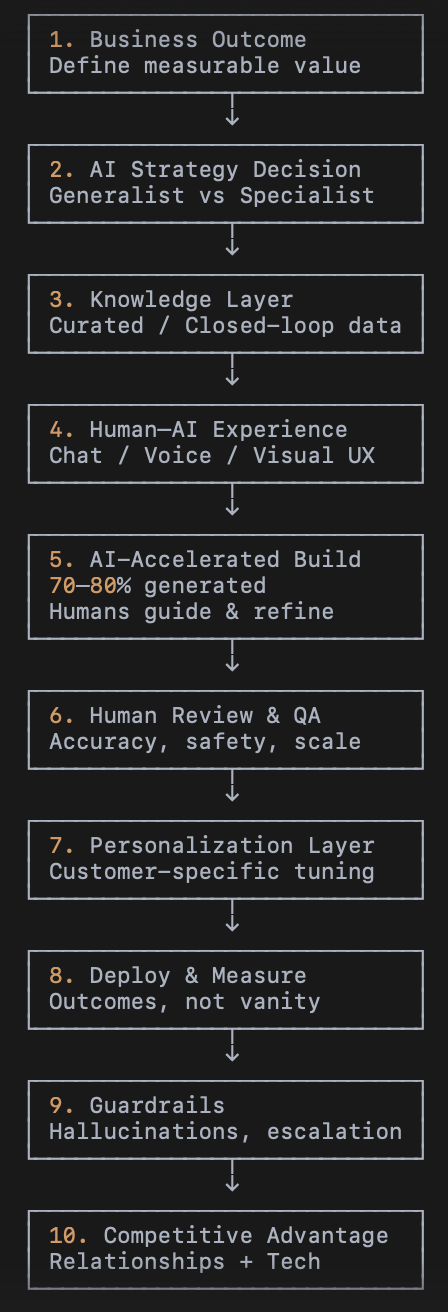
Specialist AI, by contrast, is purpose-built. At AI MedConsult, the platform is trained on a tightly controlled, domain-specific knowledge base focused on aesthetic medical practices. This “closed-loop” approach enables the AI to deliver consistent, relevant, and highly personalized interactions—something generalist models struggle to do reliably.
The key takeaway: business value comes from precision, not novelty. AI is most effective when it is deeply aligned with a specific customer problem and a clearly defined outcome.
AI as a Force Multiplier, Not a Replacement
Throughout the conversation, Benjamin repeatedly emphasized that AI works best as a force multiplier rather than a wholesale replacement for humans.
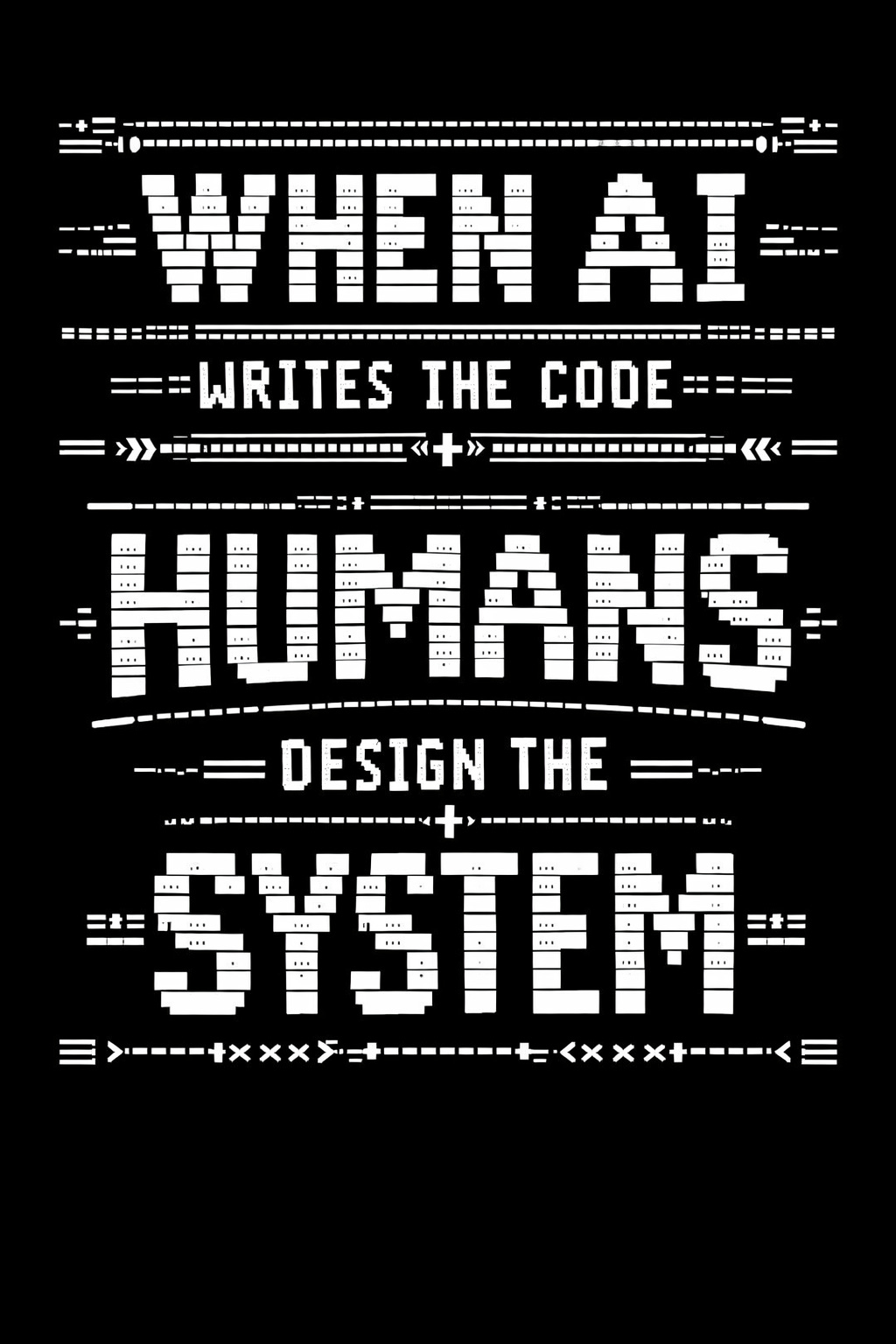
In product development, AI has dramatically accelerated the pace of work. Features that once took days can now be scaffolded in minutes. Engineers can reach an initial 70–80% solution almost instantly, then focus their expertise on refinement, edge cases, and quality. The result is faster iteration, quicker releases, and more experimentation.
But this speed does not eliminate the need for experienced engineers. On the contrary, it increases the value of those who understand systems deeply, can reason about trade-offs, and know how to guide AI tools effectively. The art is no longer just writing code—it’s shaping, reviewing, and steering it.
The Changing Nature of Engineering Teams
As AI reshapes development workflows, team composition is changing as well.
Traditional role boundaries—developer, tester, DevOps, product manager—are beginning to blur. One person can now cover multiple responsibilities with the help of AI. At the same time, new roles are emerging, particularly around AI engineering, model training, and system oversight.
What matters most is not a specific programming language or toolset, but the ability to think critically, adapt quickly, and deliver outcomes. As Benjamin noted, he hires and evaluates people based on results, not hours worked or lines of code written.
This shift also raises important questions about maintainability. When large portions of code are AI-generated, teams must be deliberate about standards, review processes, and shared understanding. Speed without comprehension can become a liability.
Competitive Advantage in an AI-Saturated World
If everyone has access to the same AI tools, where does competitive advantage come from?
According to Benjamin, the fundamentals have not changed. Winning still requires:
A real market with real demand
A compelling value proposition
Customers willing to pay for outcomes
What has changed is the cost and speed of execution. AI lowers the barrier to entry, enabling more competitors and more experimentation. This may lead to smaller, leaner companies—and more entrepreneurship overall—but it does not eliminate the need for strategy, differentiation, or trust.
In fact, relationships may matter more than ever. Technology can be copied; human connection is harder to replicate. Benjamin summed it up succinctly: great companies must be built on relationships and technology, not one or the other.
The Human Side of AI Adoption
The conversation also explored the downsides of AI—particularly in customer experience. Poorly implemented automation can feel impersonal, frustrating, and rigid. Anyone who has battled a scripted chatbot knows this pain.
The lesson here is not to reject AI, but to deploy it thoughtfully. Effective AI systems must be empowered to reason, adapt, and escalate when necessary. Just as importantly, companies must make conscious cultural choices about how much autonomy their AI—and their people—are allowed to exercise.
Thinking, Not Just Prompting
Perhaps the most philosophical part of the discussion centered on cognition itself. As AI becomes better at generating text, code, and content, there is a real risk that humans stop thinking deeply and outsource too much judgment to machines.
Both speakers agreed: the goal is not to think less, but to think better. Asking sharper questions, synthesizing information, and exercising judgment remain uniquely human strengths. AI should amplify those abilities—not replace them.
Technologies
AI-driven product development is increasingly shifting from manual code construction to model-assisted synthesis, where large language models generate a substantial portion of application logic from structured prompts, existing codebases, and domain constraints. In this workflow, AI acts as a first-pass implementation engine, rapidly producing scaffolding code, test cases, and integration logic that engineers then refine. This materially reduces time-to-initial-solution, often compressing days of development into minutes. However, the technical challenge moves upstream: teams must invest in prompt rigor, architectural guardrails, linting standards, and automated validation to ensure that AI-generated code aligns with system invariants, security requirements, and long-term maintainability.
As AI adoption scales, software architecture and team practices must adapt to prevent entropy in rapidly generated systems. Production-grade reliability increasingly depends on enforcing deterministic interfaces, versioned APIs, and strong observability rather than relying on individual developer intuition. Since AI-generated code may lack implicit design rationale, engineering teams must emphasize explicit documentation, ownership boundaries, and continuous refactoring cycles. In this environment, senior engineers add the most value not by writing more code, but by shaping constraints, reviewing failure modes, and designing systems resilient to both human and machine-generated changes.
Final Thoughts
AI is not a silver bullet, nor is it an existential threat—at least not yet. It is a powerful tool that magnifies intent. Used thoughtfully, it can unlock extraordinary productivity and creativity. Used carelessly, it can lead to shallow thinking and brittle systems.
The companies that win in this new era will not be the ones that adopt AI the fastest, but the ones that integrate it most wisely—grounded in real customer needs, guided by human judgment, and focused relentlessly on outcomes.
As Benjamin Stover’s conversation on the Snowpal Podcast made clear, the future of AI is not just about technology. It’s about how we choose to build, work, and think alongside it.